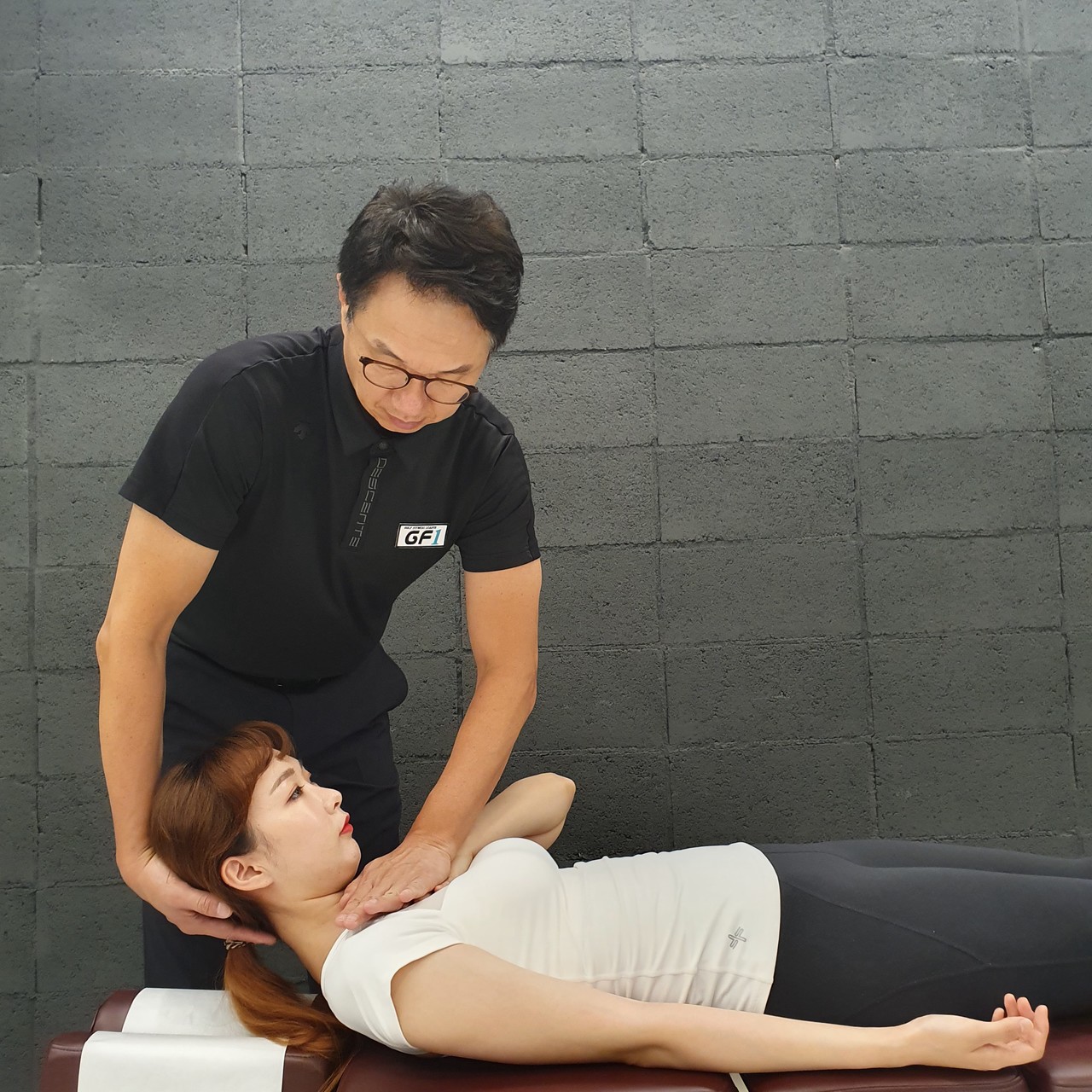
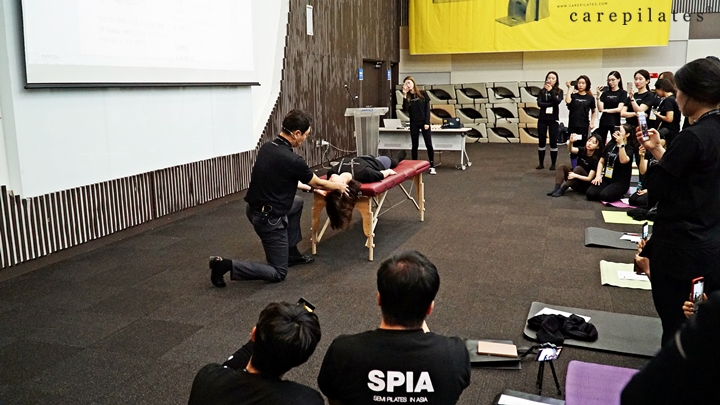
20가지 정형학적 검사 및 테스트
이것만 알면 ! 고객 만족 안심 재등록률 보장됩니다.
사전 검사와 분석 없는 레슨? 센터에 들어오는 모든 사람이 이상이 없다고 가정하고 레슨을 하시나요?
고객의 몸 상태를 정확히 평가하고 분석해야만 가장 안전하고 효율적인 레슨 프로그램을 구성 할 수 있습니다.
2단계의 필라테스 임상 분석전문가 과정은 일반적으로 물리치료, 운동처방, 의과대학등에서 환자나 고객의 의학적 몸의 상태를 검사할 수 있는 수준입니다.
필라테스 강사가 의학적 진단을 하지 못한다 해도 고객의 몸 상태에 대한 이해와 분석적 결과에 따른 필라테스적 적용이 이루어질 수 있다면 최상의 필라테스 효과를 얻을 수 있으며 경쟁력 있는 필라테스 강사로서 인정받을 수 있을 것입니다.
이 교육에서는 필라테스 강사로서 무엇을 어떤식으로 해야 하는지와 여러분들이 하는 필라테스 레슨이 왜 그런 효과가 얻을 수 있고 어떤 부분을 하지 말아야 하는지 해야 하는지에 대한 기준을 알 수 있을 것입니다. 단순한 레슨 기술 보다는 자신을 신뢰하면서 제공할 수 있는 지식적 자신감입니다.
무엇보다 정확한 검사와 분석은 강사에 대한 고객의 신뢰도가 높아지기 때문에 꾸준히 고객을 유지할 수 있습니다.
분석 후 레슨을 하면 이런 효과가 있습니다.
강사는 정확한 프로그램을 만드는데 기초 자료가 되는 정보를 얻을 수 있다.
- 고객이 자신의 몸 상태를 기반으로 하는 레슨인것을 신뢰한다.
- 자신의 몸 상태 정보를 보유한 센터를 떠나지 않는다.
- 몸 상태는 바뀔 수 있기 때문에 새로운 레슨 프로그램을 구성할 수 있다.
- 강사는 몸이 좋아지거나 나빠져도 근거 있는 이유를 제시할 수 있다.
고객의 불안감을 해소 시켜주며 특별한 강사로 보일 수 있다.
이런 강사에게 꼭 필요합니다.
- 배운대로 레슨을 하고 있지만 레슨이 고객에게 맞는 것인지 확신이 서지 않는다.
- 레슨 프로그램 구성 시 어떤 프로그램을 얼마나 해야 하는지를 잘 모르겠다.
- 고객이 몸이 좋아지거나 나빠졌다고 표현할때 필라테스 연관성을 파악하지 못하겠다.
- 고객에게 하면 안 되는 동작이 무엇인지를 정확히 몰라서 불안하다.
20 Orthopedic Assessments and Tests
Essential Measurements and Assessments Before a Pilates Lesson
A lesson without prior assessment and analysis?
Do you conduct lessons assuming that every client who enters your studio has no physical issues?
Only when you accurately assess and analyze the client’s physical condition can you design the safest and most effective lesson program.
The Level 2 Pilates Clinical Analysis Specialist Course provides assessment skills at a level commonly used in physical therapy, exercise prescription, and medical education to examine the physical condition of patients or clients.
Although Pilates instructors do not provide medical diagnoses, if they can understand a client’s physical condition and apply Pilates based on analytical results, they can achieve the best possible Pilates outcomes and be recognized as highly competitive instructors.
In this course, Pilates instructors will learn what to assess, how to assess it, and why their Pilates lessons can produce certain results. They will also learn clear standards for what should be done and what should be avoided.
This is not simply about learning teaching techniques.
It is about developing knowledge-based confidence that allows instructors to provide lessons they can truly trust.
Most importantly, accurate assessment and analysis increase the client’s trust in the instructor, which helps maintain long-term client relationships.
Benefits of Teaching After Assessment
When lessons are provided after proper analysis, the following effects can be achieved:
Instructors can obtain essential information that becomes the foundation for creating accurate programs.
Clients trust that the lesson is based on their own physical condition.
Clients are less likely to leave a studio that understands and records their body condition.
Since the body can change over time, new lesson programs can be designed accordingly.
Instructors can provide evidence-based reasons when the client’s body improves or worsens.
Clients feel less anxious, and the instructor can be seen as a more specialized professional.
This Course Is Essential for Instructors Who:
Teach according to what they have learned, but are not sure whether the lesson truly fits the client.
Do not know which program to choose or how much of it to apply when designing lessons.
Have difficulty understanding the relationship between Pilates and a client’s physical improvement or discomfort.
Feel unsure or anxious because they do not clearly know which movements should be avoided for certain clients.